There is something strange and inevitable about the persistence of Greek myths. Three thousand years later, we still recognize Icarus in the entrepreneur who burns everything he has built, Narcissus in the polished mirror of our screens, Prometheus in every whistleblower who crosses a line no one had dared to cross before, Ariadne the fear of abandonment. Myths do not tell the story of Antiquity - they describe an architecture of the human that time cannot dismantle.
That is where Anatomy of the Myth begins.
Not just from an academic fascination with ancient Greece, but also from a simpler and more brutal question: what does a myth look like inside a living body? Not in a marble statue, not in a fresco, but in the backward arch of a falling man, a figure swallowed by granite, two bare feet gripping volcanic rock, a hand that has not yet let go of the thread.
The Body as Mythological Territory
Anatomy of the Myth is a portrait series built around a single conviction: a myth is not a story. It is a state of the body.
The series does not try to illustrate. Nor does it reconstruct. It finds - in contemporary bodies, in real landscapes, in natural light - the precise physical posture that a myth requires. Each image works on a specific moment: not the heroic gesture in its glory, but the instant before, the instant after, or the instant of dissolution itself.
What remains when you strip the myth of its marble and its distance is something more uncomfortable and more alive. The body that falls. The body that searches for itself and cannot find itself. The body that holds a thread it will eventually drop. The body that refuses to stop moving.
The Oldest Landscape in Brittany
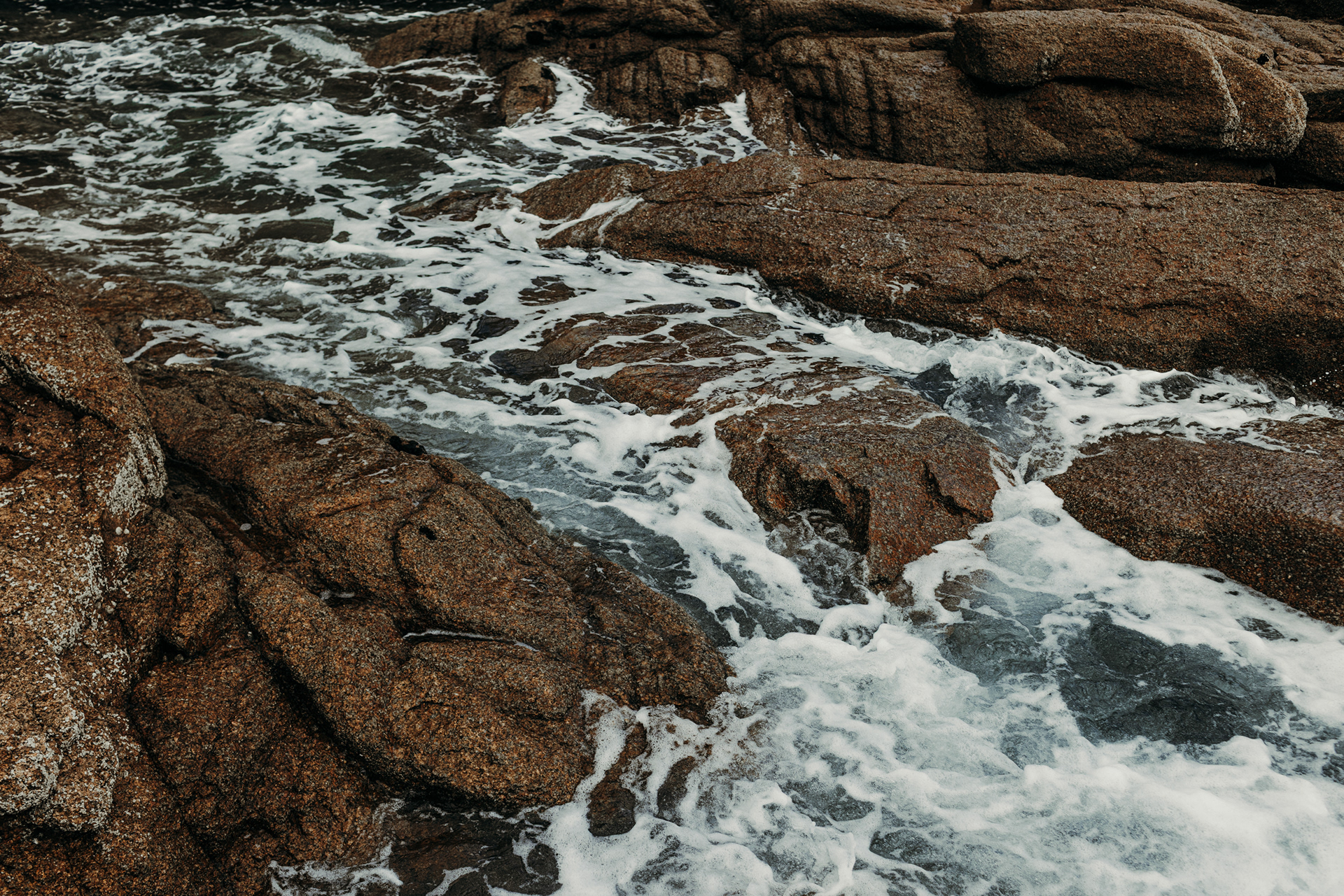
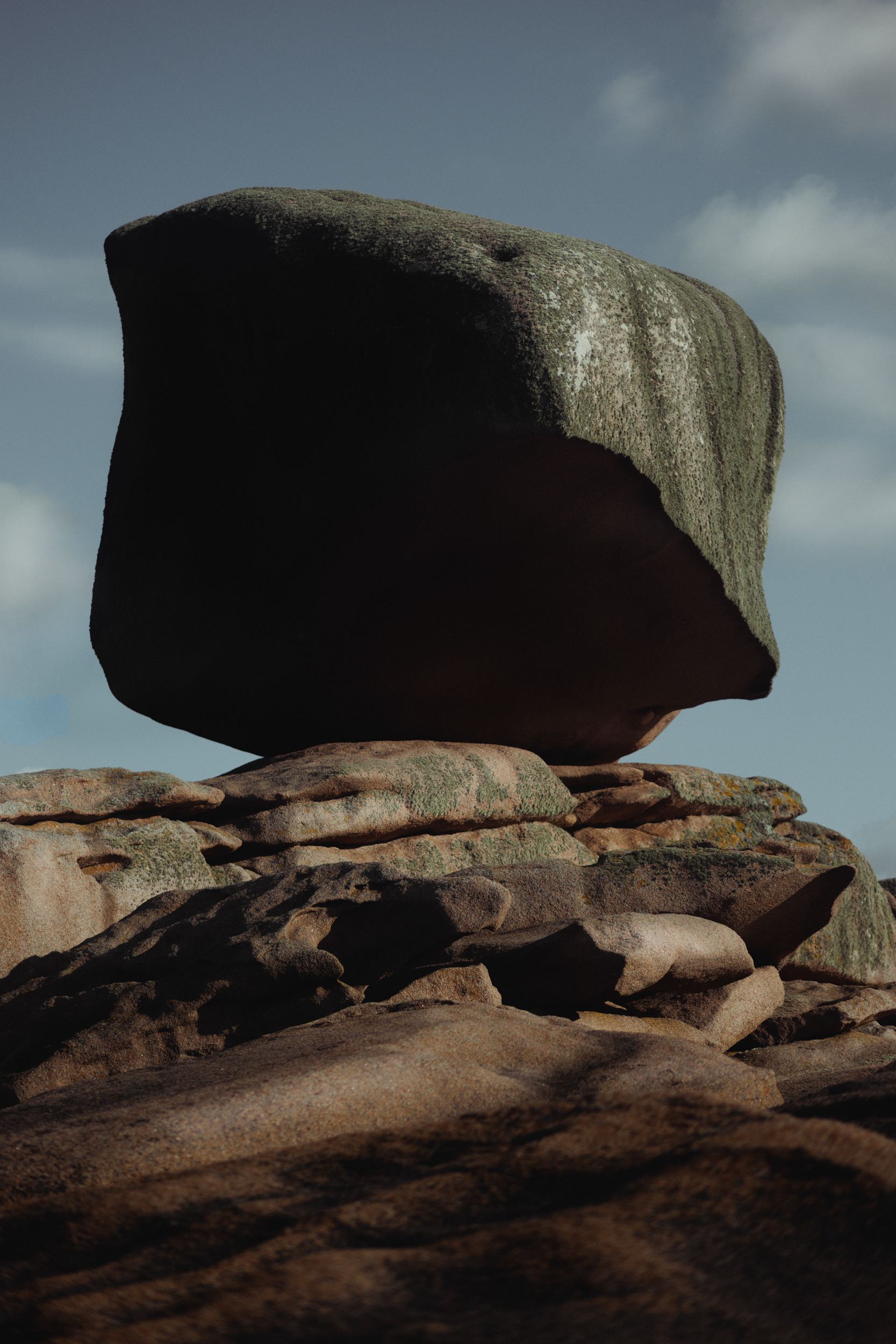
Every image in the series was shot in a single location: the pink granite coast of Trégastel, in Brittany. The choice was not decorative.
The granite here is 300 million years old. It predates the myths by an order of magnitude so large it stops making sense to count. The rocks have been shaped by Atlantic erosion into forms that are already almost bodies - rounded, organic, massive, worn smooth in some places and brutally sharp in others. They do not look like a backdrop, they look like they have been waiting.
There is something specific to this coast that serves the series well: the scale. The boulders are enormous. A human figure placed among them becomes suddenly small - not diminished, but correctly sized. The myths are not human-scale stories. They are stories about humans caught in forces larger than themselves, and the granite of Trégastel makes that visible without any artifice.
Shooting in Brittany, in this particular light - grey skies, diffuse Atlantic luminosity, no sun that flatters - was also a decision about honesty. This light does not embellish. It reveals.
ICARUS
PROMETHEUS
ARIADNE
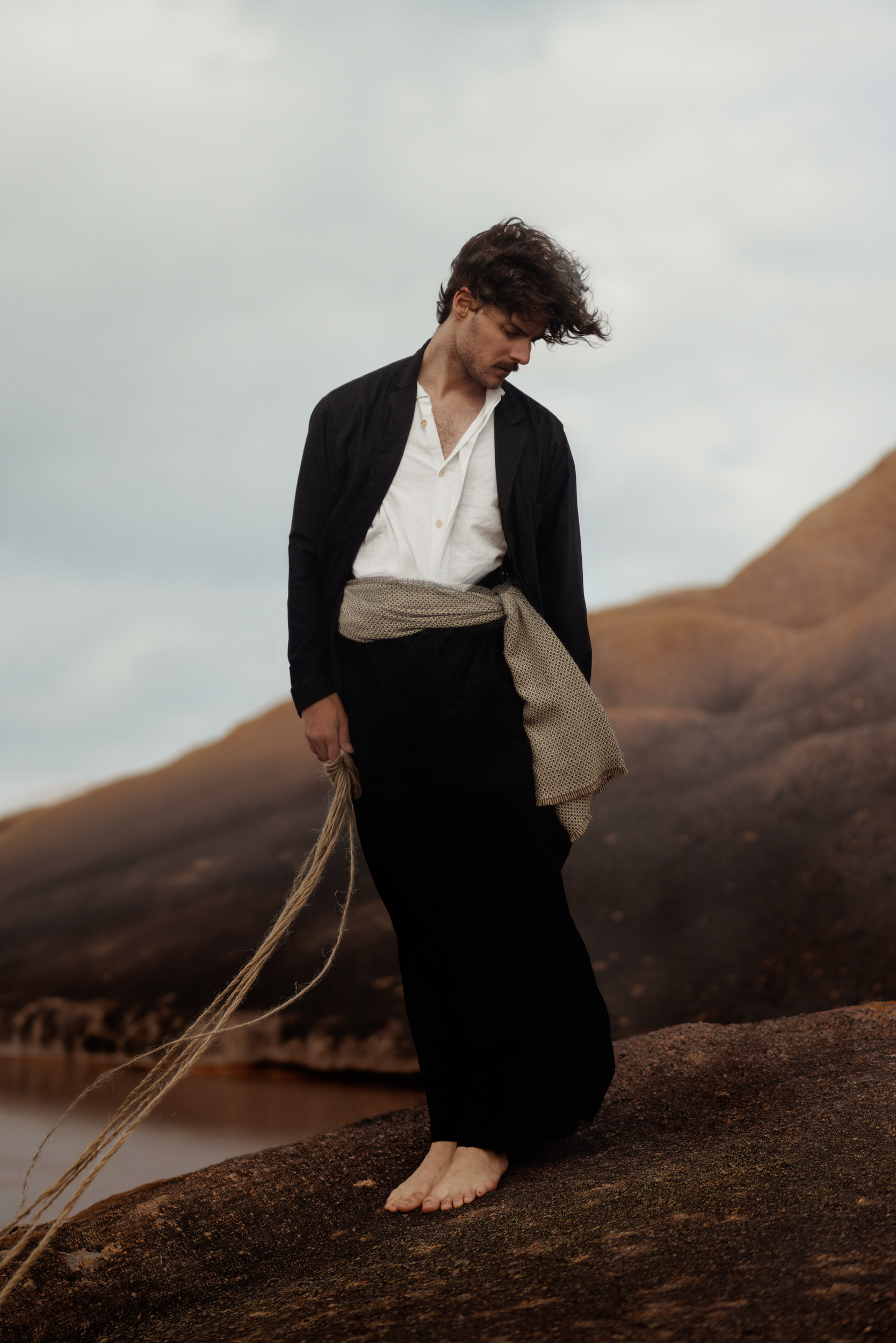
THESEUS
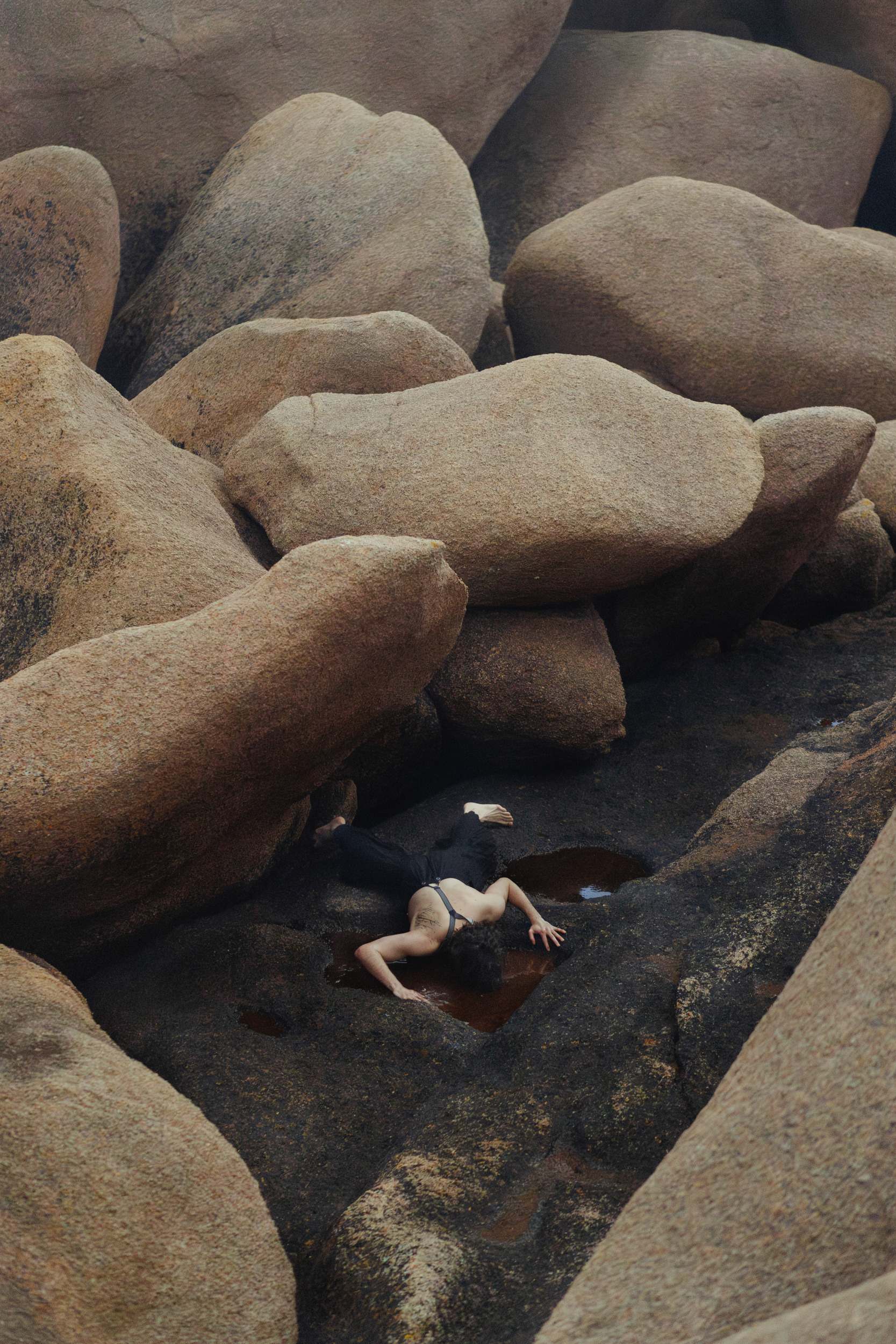
NARCISSUS
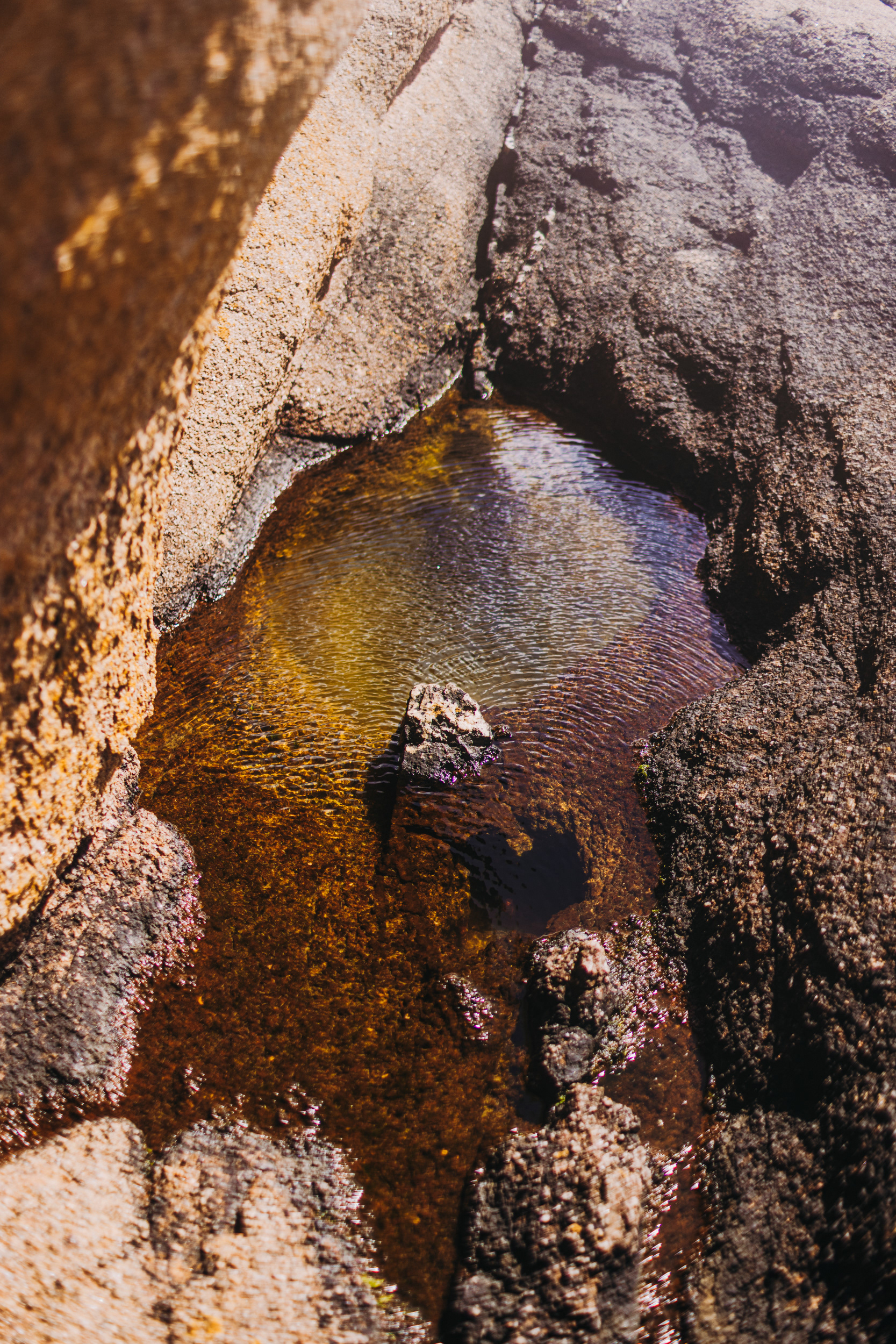
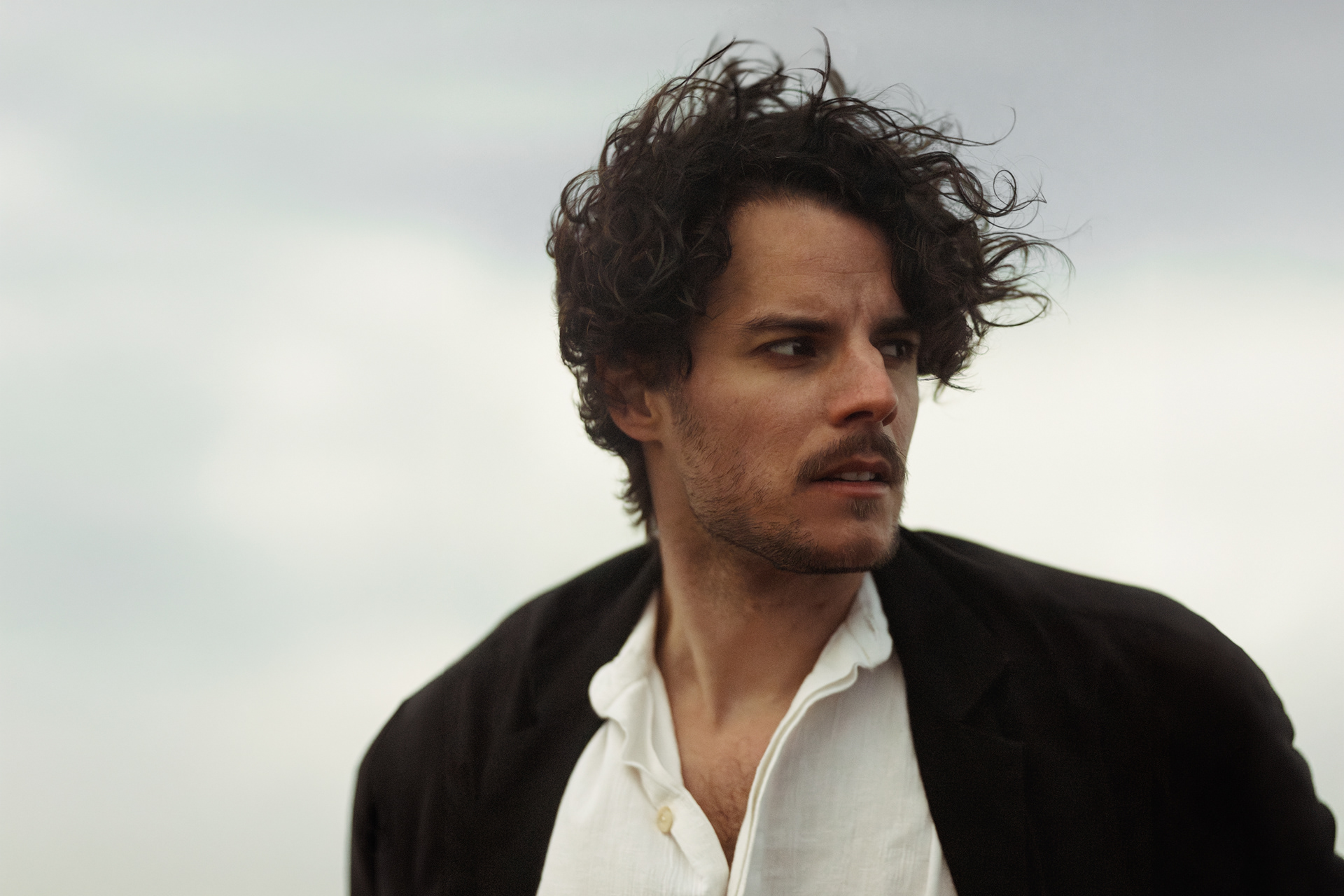
THESEUS
Five MYTHS to be inspired by
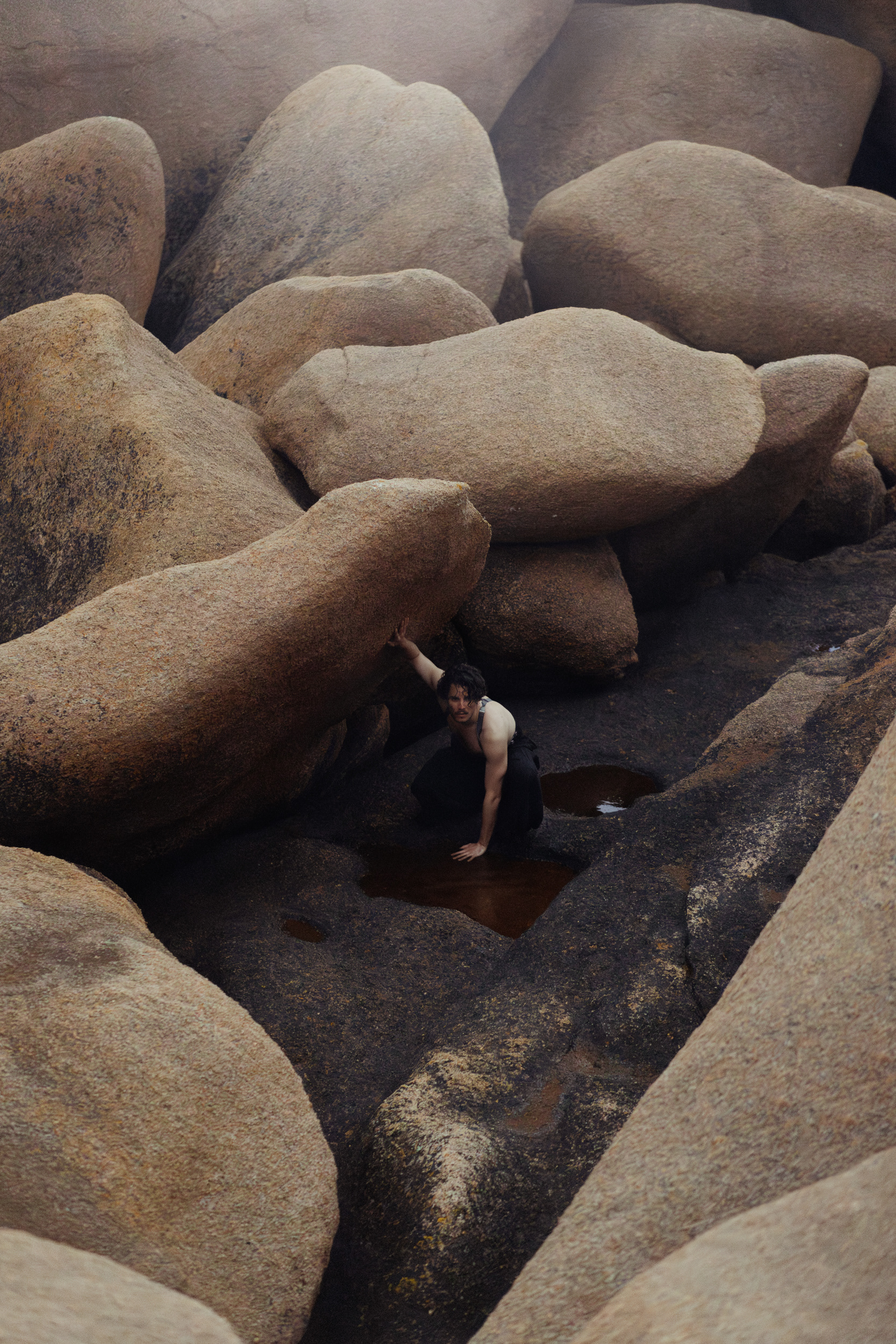
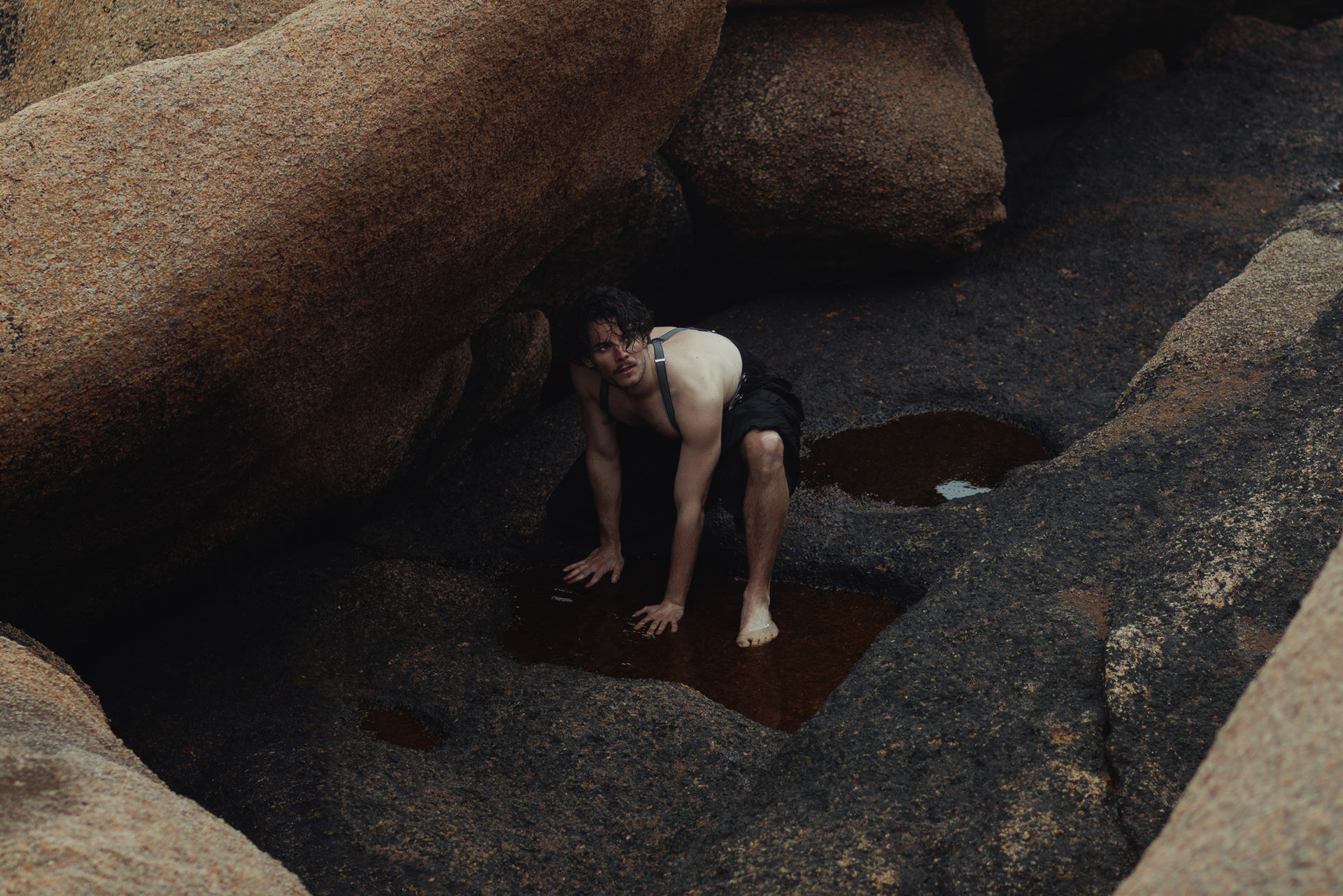
Prometheus - He is not chained. He is not spread-eagle against a cliff waiting for the eagle. He is emerging - wet, bare-chested, crawling out from between two enormous boulders, his gaze directed upward and outward with an intensity that is neither pleading nor resigned. This is Prometheus between punishments, or after them, or despite them, still moving. The rock pools around him suggest both entrapment and the element he gave away: water carrying the memory of fire.
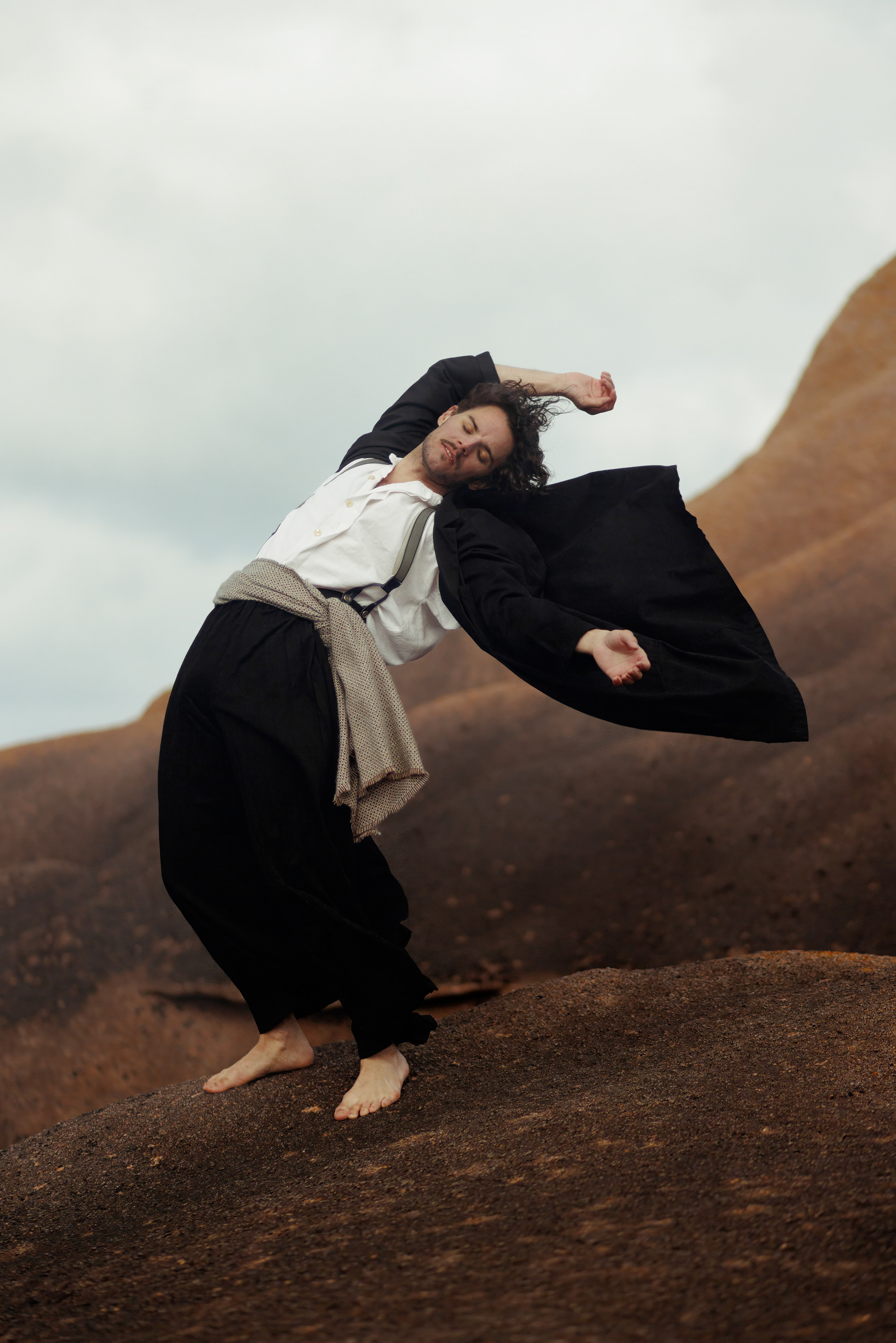
Icarus - The fall is happening, body arched backward over the rock, arms thrown up, jacket caught in the wind and suspended mid-air, eyes closed, face turned to the sky he is leaving. He is not fighting it. The surrender is total, and in that surrender, something close to grace.
Narcissus - Shot from above, he lies curled in a shallow rock pool between boulders so massive they dwarf every human scale. The pool is minimal - barely a mirror, barely water - but it is enough. His face has already dissolved into the landscape. This is not the beginning of Narcissus's obsession. This is its end: the body that loved itself into disappearing, drowned, returned at last to the ground it could not stop contemplating.
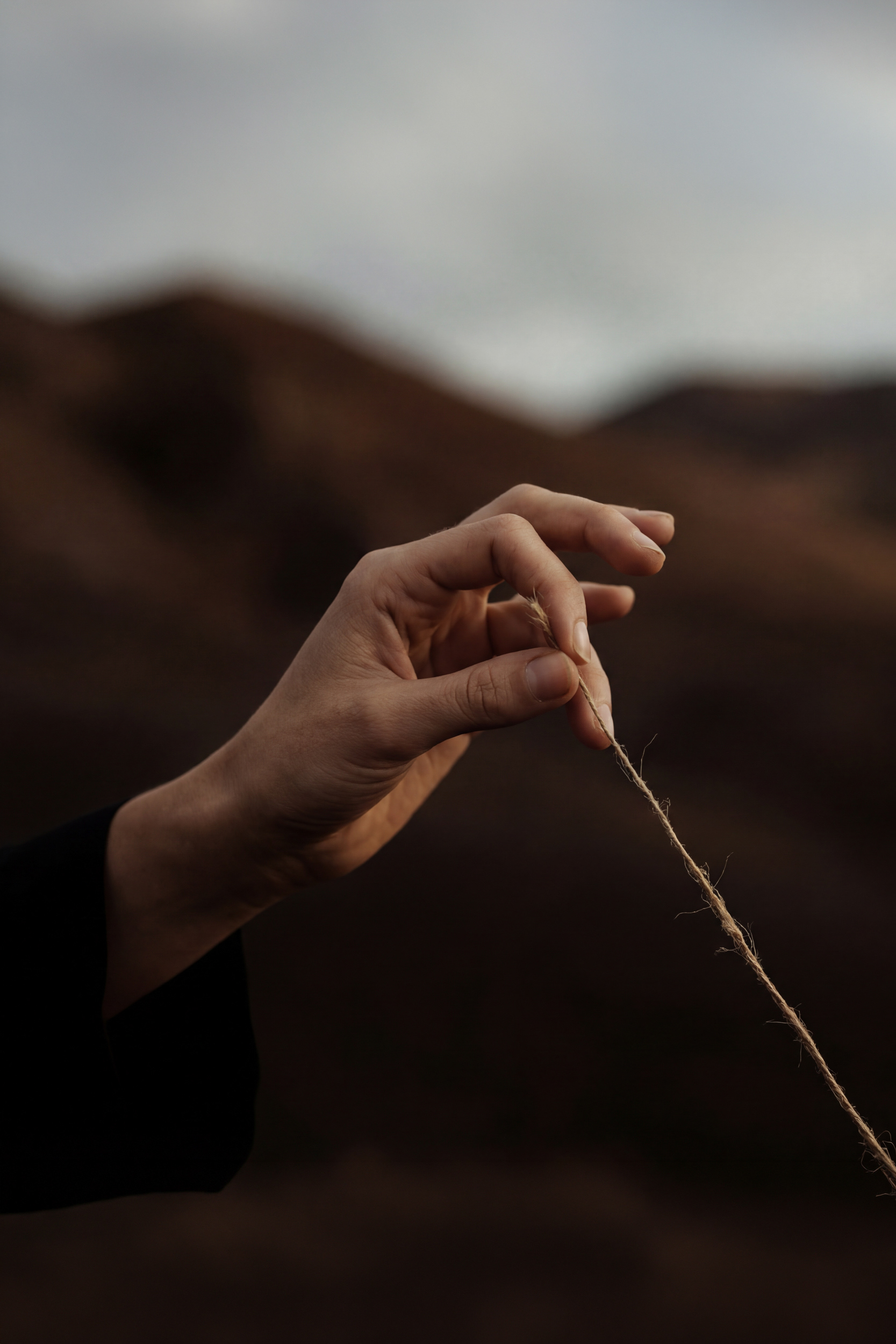
Ariadne - A single hand, close, precise, the fingers pinching a frayed thread of rough twine between thumb and index finger, the thread falling away into darkness. She is at the moment just before release - or just after. The hand of the princess who made the hero possible, photographed alone, without the hero, without the labyrinth. Only the thread, and what it cost her to hold it and to be left abandoned.
Theseus - a diptych. In the first image, a close portrait: he is looking toward the horizon with the focused intensity of someone who sees Crete approaching and does not step back. Wind in his hair. Mouth slightly open. A man who has decided. In the second image, full figure: he stands on the granite rock, gaze dropped to the ground, holding the end of Ariadne's thread. The labyrinth is behind him but he is still lost. Everything else he will lose is still ahead. Between these two images, the entire myth.
Ariadne's thread in classical mythology is the original navigational tool - the thing that makes it possible to enter the darkness and find the way back. In the series, it becomes something else: the evidence of a connection that the myth preserves on one side only. She gave it. He used it.
What the Myths Say About Us
It would be easy to read Anatomy of the Myth as an exercise in aesthetics, portraits in a dramatic landscape, historical references, careful visual coherence. That would be to miss the point entirely.
Greek myths are x-rays. Because they were built to make visible what societies cannot look at directly: the pride that precedes destruction, the self-love that ends in dissolution, the transgression that liberates and condemns simultaneously, the hero who returns victorious and discovers he has lost everything on the way back, the woman whose courage and sacrifice do not earn her a place in the story she made possible.
What has changed in three thousand years is not the structure of these human experiences. It is the setting in which they unfold. Icarus takes infinite forms in a world where excess is a commercial virtue. Narcissus has found in social media a planetary reflecting surface. Prometheus runs through every ethical debate about technology, medicine, artificial intelligence. Ariadne is in every collaboration where one person provides the tools and the other takes the credit.
Shooting these figures on 300-million-year-old granite - rock that existed long before the myths were told and will exist long after they are forgotten - was a way of asking a question that the landscape itself already answers: how long have we been doing this?
Technical Note
Actor: Paul Veloso.
Assistants: Nicolas Marat.